- Home
- Blog
- A Short Story about Three Trees: Ravintsara, Ravensara & the True Camphor Tree
A Short Story about Three Trees: Ravintsara, Ravensara & the True Camphor Tree
April 2026
Ravintsara, Ravensara are often the subject of discussions among aromatherapists, some defending one over the benefits of the other. It may be sometimes forgotten that there is a third party coming into the equation – the True Camphor Tree which may unwillingly add fire to the disagreement and possibly a certain element of confusion.
Journeying back to the origins of Ravintsara and the True Camphor Tree
Ravintsara shares its botanical name with the True Camphor Tree, Cinnamonum Camphora. Both are large evergreen trees from the Lauraceae family, with a grey to brown bark, glossy leaves, a broad, rounded canopy and grow to an impressive height of 20 to 30m. The leaves are oval to elliptical with a main central vein and two discreet side veins. The clusters of creamy white flowers slowly turn in time into small dark purple berries. The resemblance is so close that it is impossible to distinguish them from one another with the naked eye.
There are, however, two key differences between them.
- Upon crushing the leaves of Ravintsara – Cinnamonum Camphora - a fresh eucalyptus aroma is released, but only from trees grown in Madagascar.
- In contrast, The True Camphor Tree – also Cinnamonum Camphora – emits a strong camphor scent from trees found specifically across Asia: China, Taiwan, Korea and Japan
It is believed that Cinnamonum Camphora originated from Asia. The tree was a prized commodity and traded widely. The Camphor extracted from the leaves had been used extensively in traditional Chinese Medicine for centuries as a stimulant, an analgesic, an anti-viral and bacterial. The Oil also had cultural and religious significance for its ability to purify and disinfect places of worship. The wood was sought after in cabinet making partly for its durability and its aromatic content. It was used to protect clothing and precious vulnerable items as its smell repels insects and destructive organisms. It is no wonder that the reputation of such a magnificent tree crossed borders and continents and its appeal made it a desired possession.
It is not known when exactly the first trees touched the shores of Madagascar. Historian botanists tend to agree that this happened most likely during the XVIIIth century and was further promoted by the French colonisation of the island.
A new land, a new climate, and new soil conditions formed the set of unfamiliar parameters to which the trees had to adapt. They settled well, grew and developed retaining all their physical characteristics. But in response to the foreign environment they faced, their enzymatic pathways shifted, no longer synthetising Camphor as the dominant compound but instead favouring the production of 1.8 cineole. This tendency happened over time through natural selection, likely further reinforced by human endeavour to propagate trees exhibiting the strongest cineole expression. Indeed this shift was not lost on the Malagasy people and they quickly recognised the healing potential of the unexpected symphony of compounds held in the secretory cells of the leaves.
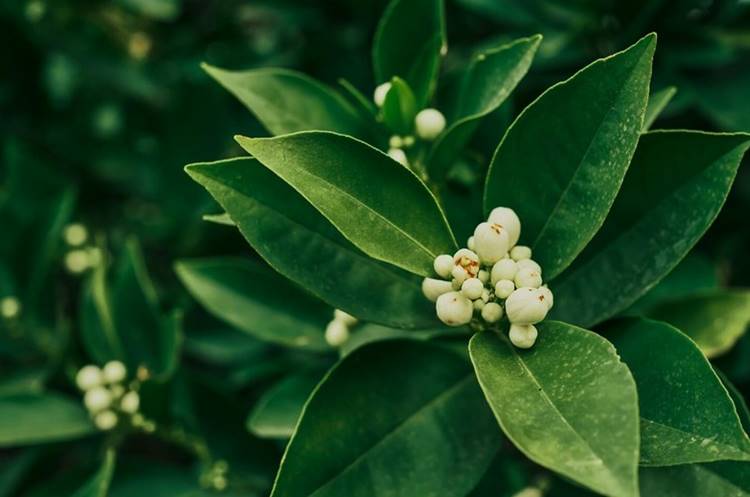
Ravintsara Essential Oil
The essential oil distilled from the leaves of Cinnamonum Camphora trees grown in Madagascar typically is made of 50 to 60% 1.8 cineole, an oxide, 15 to 30% of monoterpenes (sabinene, alpha terpineol, alpha pinene) and 5 to 15% of Monoterpenols (α-terpineol, linalool). This accounts for the highly decongestant and anti-viral/microbial aspects of the oil but also for its ability to calm and soothe. It is the presence of the monoterpenols in the oil that gives Ravintsara its gentle floral note softening the harsh and aggressive tones of cineole so predominant in eucalyptus globulus and Rosemary officinalis.
Ravintsara is a powerful decongestant, anti-viral and anti-bacterial. It is an oil of choice to help and seek relief from any lung infections – cold, flu - breathing congestion – cough, bronchitis – as it helps loosen mucous, clear blocked sinuses, and soften the effects of allergies.
It can be used as an immune support by dispersing the oil as a preventative measure.
The gentle aspect of Ravintsara soothes and calms, brings lightness to the head made heavy with the side effects of flu or seasonal hay fever. It releases tension in the body and in the mind, promoting peace and relaxation and welcoming restorative and reparative sleep.
Ravintsara is fresh and light never wanting to overpower. It clears, cleanses and purifies, filling the air with a soft floral yet invigorating quality. Its gentle nature is what makes it unique, neutralising the presence of external factors from both the physical and mental in a calm and soothing way - An all around healer in a single oil.
Ravintsara isn’t the only essential oil bearing tree grown in Madagascar. It is often confused with its look alike, a slightly smaller tree with a close sounding common name – Ravensara.
Ravensara
Unlike Ravintsara, Ravensara botanically known as Ravensara aromatica is indigenous to Madagascar. It is also a member of the Lauraceae family and shares the same physical characteristics of Cinnamonum Camphora albeit being of a smaller size. The resemblance is so uncanny that it takes the eye of an expert to distinguish one from the other.
But this is where the similarities end as the essential oil of Ravensara differs completely from that of Ravintsara. The chemical analysis typically shows a much lower level of 1.8 cineole as it is mainly composed of variable amounts of methyl chavicol – estragole- and limonene, The aroma is fresh, spicy with a herbal note reminiscent of aniseed.
The essential oil of Ravensara acts as a nervous system support, is antispasmodic with the ability to reduce muscle spasm. It is balancing on the mind dispersing mental agitation and anxiety in stressful situations. Unlike Ravintsara, Ravensara can only offer a mild immune support. Due to the methyl chavicol (a potential carcinogenic) content which can vary greatly from one source to the next, the use of Ravensara essential oil comes with caution and is not recommended for long-term use and is to be avoided with pregnant women and children.
Ravintsara & Materia Aromatica
Materia Aromatica only stocks Ravintsara, the essential oil steam distilled from the leaves of the Madagascan trees of Cinnamonum Camphora. The oil is also certified organic. The batch currently held in stock contains 58.21% 1.8 cineole, 13.18% sabinene and 6.27% of alpha ternpineol, the three main compounds belonging to the oxides (respiratory decongestant), monoterpenes (anti-microbial synergy) and monoterpenols (softening with a floral relaxing note) that typically define the chemical make-up of Ravintsara.
Using & blending Ravintsara
Ravintsara blends well with those oils, like itself, rich in 1.8 cineole of which the eucalypti and Rosemaries are the first to come to mind. It pairs well with some of the woods such as pine, black spruce. It likes the gums especially frankincense which will emphasise its soft quality. It will enjoy the presence of some flowers, especially lavender, spike lavender and lavandin, also clary sage. It will add to the explosive burst of the spices such as cardamon, ginger although it will act as a buffer to hide the harshness of black pepper. It is also good friend with the citruses and shares a particularly close bond with lemon and grapefruit.
Ravintsara is open to many blending ideas and ready to offer its healing qualities in formulations aiming at decongesting lungs and nose on the physical level, clearing the mind and the head on a mental level, bringing calm and peace on a deeper and subtle level.
With summer just around the corner, flowers will soon be bursting into bloom and the grass harvest for horses and cattle will begin. For many people, however, this beautiful season also brings pollen and dust — two among many triggers that can quickly turn daily life into a misery.
Here is a blending idea to bring relief and soften the effecgs of congestied sinuses, red eyes and an overall exhaustion
This will make 30 drops or 1 ml - Put 10 drops by the bed at night or whenever having a rest. Or make up in a small bottle and smell when needed.
Ravintsara 8
Franckincense 8
Eucalyptus radiata 4
Lemon 6
Patchouli 4
For those who prefer a ready-made blend, Ravintsara is in the following Materia Aromatica blends:
Deensive Qi -Cajeput, Eucalyptus radiata, Niaouli, Pine, Ravintsara & Tea Tree
A powerful combination of oils useful for dispersing Wind Cold & Phlegm and for reinforcing the body’s Defensive Qi